A strong foundation for learning and development
Our EYFS programme brings together seven interconnected areas of learning, nurturing curiosity, confidence and positive relationships while recognising each child’s individual journey.
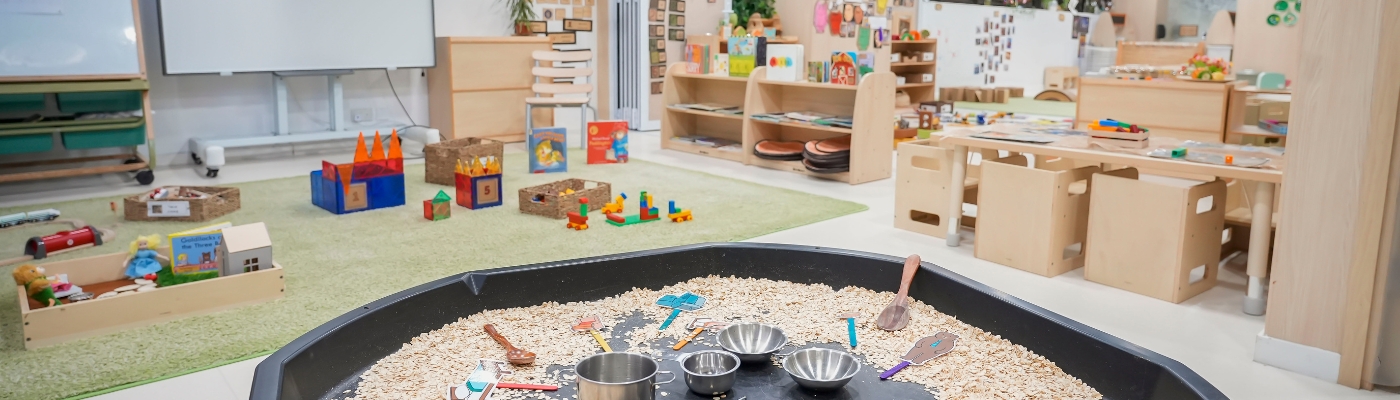
All seven areas of EYFS learning and development are represented across our thoughtfully designed campuses.
The EYFS framework
Our educationally harnessed play programme builds on the United Kingdom’s Early Years Foundation Stage (EYFS) curriculum, which supports learning, development and wellbeing through age-appropriate expectations.
At Malvern College Pre-School Hong Kong, we cover seven interconnected areas of Learning and Development. Together, they nurture children’s curiosity and enthusiasm for learning while helping them form positive relationships and flourish socially, emotionally, physically and intellectually.
The foundation
01
Personal, Social and Emotional Development
Building relationships, self-confidence and self-awareness; developing social skills and respect for others; and learning to understand and manage feelings and behaviour.
02
Communication and Language
Developing listening, attention, understanding and speaking so children can communicate ideas, respond to others and take part confidently in conversations.
03
Physical Development
Strengthening movement, coordination, control and self-care while developing an understanding of physical activity and healthy choices.
Growing from the Prime Areas
Literacy
Developing phonics, reading and writing in English, together with age-appropriate Chinese literacy using simplified characters.
Mathematics
Exploring numbers, numerical patterns, shape, space and measures through meaningful play and everyday experiences.
Understanding the World
Discovering people and communities, the natural and physical world, science and technology.
Expressive Arts and Design
Developing creativity and self-expression through art, music, movement, dance, imaginative play and varied materials.
Characteristics of effective learning
Playing and Exploring
Children investigate, experience new possibilities and develop the confidence to take a chance.
Active Learning
Children concentrate, keep trying and experience the satisfaction of achieving what they set out to do.
Creating and Thinking Critically
Children develop ideas, make connections and choose ways to solve problems.
Every Child Is Unique
Each child is recognised as a capable learner who can become resilient, confident, independent and self-assured.
Positive Relationships
Secure, respectful relationships with parents, carers and key adults help children become strong and independent.
Enabling Environments
Observation, thoughtful planning, appropriate support and well-prepared spaces extend each child’s learning and development.
Learning and Development
Children learn in different ways and at different rates; every area of learning is important and interconnected.
The seven areas are not taught as isolated subjects. A single purposeful experience—such as sharing a story, building a structure, exploring water or acting out a shop—can involve language, mathematics, movement, relationships, creativity and understanding of the world at the same time.
Teachers observe how each child engages, then plan suitable experiences and next steps from the child’s interests, strengths and stage of development.
Parent takeaway
The EYFS offers a connected and age-appropriate framework through which children learn naturally—by playing, communicating, moving, creating and exploring the world around them.
Explore the programme or speak with our team.